WhoWho developed the Alaskan Malamute?
Bred by the Mahlemut Inuit people of Alaska.
WhatWhat defines the breed?
A powerful freighting sled dog, larger and stronger than the husky.
WhereWhere did it originate?
Developed in Alaska.
WhenWhen did the breed begin?
An ancient Arctic breed.
WhyWhy was the breed created?
Bred to haul heavy loads over long Arctic distances.
About the Alaskan Malamute
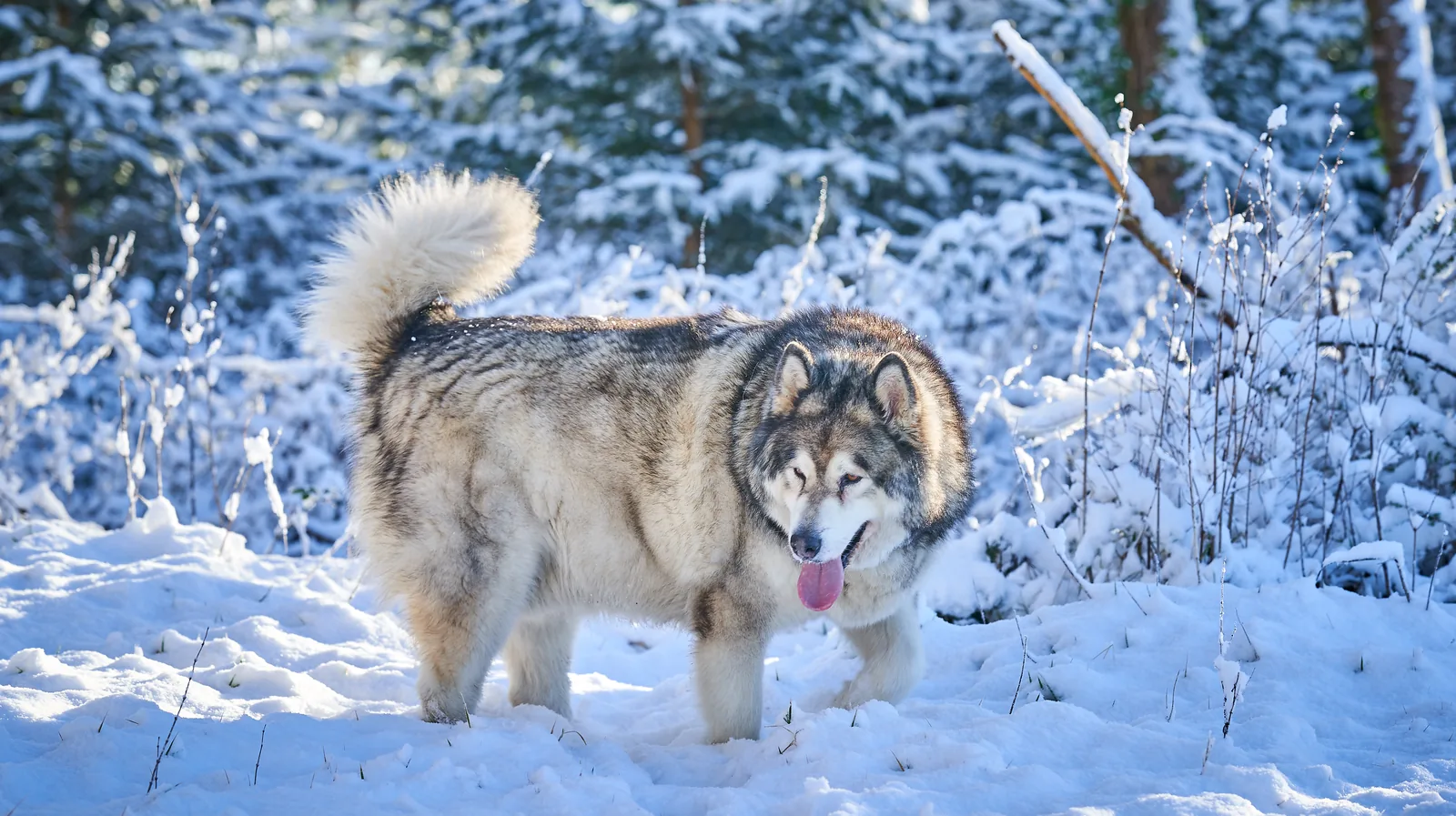
The Alaskan Malamute is one of the oldest and largest of the Arctic sled dogs, bred by the Mahlemut people of Alaska to haul heavy freight across frozen terrain. Powerful, dense-coated, and built for endurance, the Malamute is a dog of tremendous strength wrapped in a famously affectionate, people-loving personality.
Despite their wolfish looks, Malamutes are friendly and outgoing — they make poor guard dogs precisely because they tend to greet everyone as a friend. They are pack animals to the core, thriving on company and hard work, and they carry an independent streak that reflects their heritage as working dogs who had to think for themselves in brutal conditions.
Breed at a Glance
Coat Colors
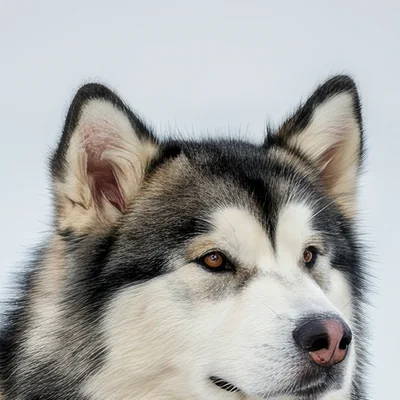
Malamutes always pair a colored coat with white on the underbody, legs, and face, usually with a striking cap or mask. Solid white is the only all-one-color option accepted.
Temperament & Personality
The Malamute is affectionate, playful, and deeply social — a gentle giant that adores its family and wilts without companionship. Confident and dignified, they also carry the independence and strong will of a working sled dog, which means they respond best to patient, consistent leadership.
- Friendly and outgoing — they love people and make notoriously poor guard dogs.
- Highly pack-oriented; they hate being left alone for long stretches.
- Independent and strong-willed, a legacy of their freight-hauling heritage.
- Playful and affectionate, often 'talking' with expressive woos and howls.
Exercise & Enrichment Needs
This is a powerful working breed with serious exercise needs. Malamutes were built to pull heavy loads all day, and without a real outlet for that energy they become bored, destructive, and prone to digging craters in the yard.
- Needs vigorous daily exercise — long walks, hikes, running, or cart/sled pulling.
- Excels at weight-pull, backpacking, and skijoring in cool weather.
- A securely fenced yard is essential; they are champion diggers and escape artists.
- Mental work matters as much as physical — bored Malamutes get into mischief.
Grooming & Care
The Malamute's thick, coarse double coat is glorious — and demanding. It sheds year-round and blows out completely twice a year in a spectacular multi-week event.
- Brush 2–3 times weekly year-round, and daily during seasonal coat blows.
- Bathe occasionally; the coat is largely self-cleaning and odor-resistant.
- Never shave the double coat — it insulates against both heat and cold.
- Expect significant fur around the home; a good vacuum is a necessity.
Health Considerations
Malamutes are generally hardy, but their size and heritage bring a few known concerns that responsible breeders screen for.
- Hip dysplasia — a common large-breed orthopedic issue; ask for clearances.
- Cataracts and other eye conditions — screening is recommended.
- Chondrodysplasia (dwarfism) — a hereditary condition with carrier testing available.
- Bloat — as a deep-chested breed, feed measured meals and avoid hard exercise after eating.
Is an Alaskan Malamute Right for You?
The Alaskan Malamute is an affectionate, striking, hardworking companion — but its size, coat, energy, and independence demand a committed, active owner.
An Alaskan Malamute may be perfect if you…
- Live an active, outdoor lifestyle and can provide daily vigorous exercise.
- Have a securely fenced yard and don't mind heavy shedding.
- Want an affectionate, social dog and can offer plenty of companionship.
Think twice if you…
- Live in a hot climate or a small apartment with little activity.
- Want a low-shedding dog or a reliable guard dog.
- Are away from home for long hours or new to strong-willed breeds.
🐾What is the Alaskan Malamute like?
Friendly, playful, and affectionate, but strong-willed and independent by nature.
🎾How much exercise do they need?
High — this is a working sled breed that needs vigorous daily exercise and a job to do.
✂️What about grooming & coat care?
Thick double coat that sheds heavily twice a year; brush 2–3 times weekly, daily during blowouts.
❤️Health & longevity
Typically 10–14 years; watch for hip dysplasia, cataracts, and bloat.
👪Who are they good with?
Great with kids and people; can be pushy with other dogs and has a strong prey drive.
The Alaskan Malamute is always welcome here.
Whether your Alaskan Malamute is here for a spa day, a fun-filled daycare visit, or a cozy overnight stay, our team understands exactly what this breed needs to feel safe, happy, and completely at home. We tailor every stay to your pet's unique personality — just like we would for our own.