WhoWho developed the Bengal?
Developed by crossing domestic cats with the Asian leopard cat.
WhatWhat defines the breed?
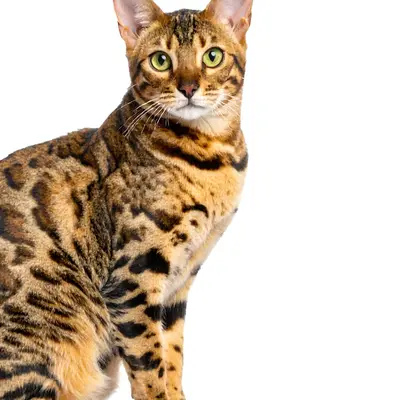
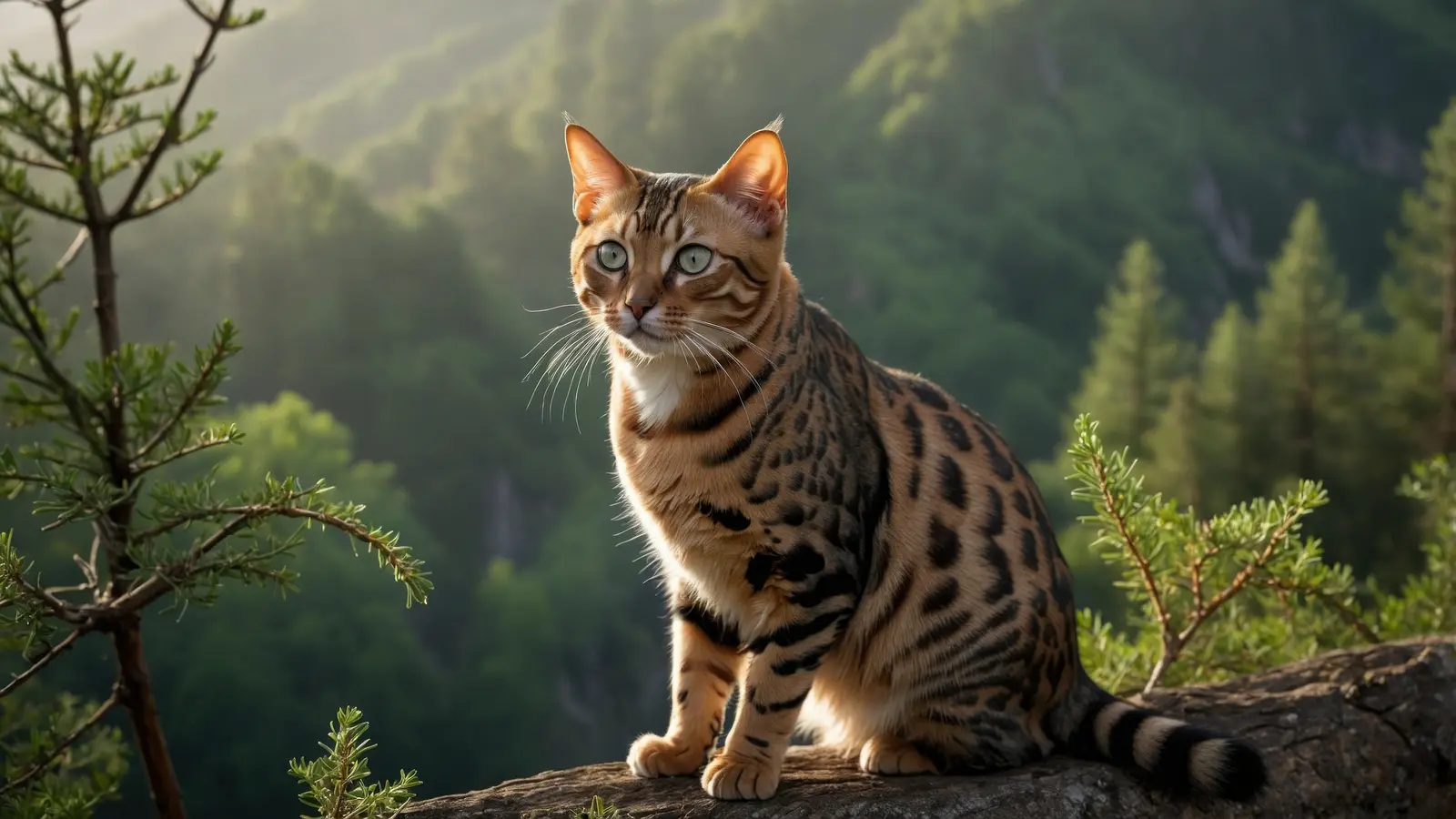
A wild-looking cat with a spotted, shimmering coat and athletic energy.
WhereWhere did it originate?
Developed in the USA.
WhenWhen did the breed begin?
Created in the 1980s.
WhyWhy was the breed created?
Bred to capture the exotic beauty of wild cats in a domestic companion.
About the Bengal
The Bengal is a domestic cat with a wild heart — bred by crossing domestic cats with the small Asian leopard cat to capture that exotic, jungle-cat appearance in a house-friendly companion. The result is a stunning, athletic breed with a shimmering, spotted or marbled coat that can literally glitter in the light. Bengals look wild, and they act with the energy and intelligence to match.
This is not a cat for passive owners. Bengals are intensely active, curious, and clever — they climb everything, investigate everything, and demand engagement. Given enough stimulation, they're playful, affectionate, and endlessly entertaining. Left bored, they'll invent their own (often destructive) fun. They suit experienced, active households ready to keep up with a truly dynamic cat.
Breed at a Glance
Coat Colors
The breed appears in a range of colors and patterns. Here are some of the most recognized.
Temperament & Personality
Bengals are brilliant, bold, and bursting with energy. They're deeply curious, love to climb and explore, and form strong bonds with their people — but they need constant mental and physical engagement. Many enjoy water, learn tricks readily, and can be leash-trained. This is a cat that wants to be involved in everything.
- Extremely active and athletic — they run, jump, and climb constantly.
- Highly intelligent — they learn tricks, open doors, and solve puzzles.
- Curious and confident, often fascinated by water.
- Affectionate on their terms but rarely a still, quiet lap cat.
Exercise & Enrichment Needs
Bengals have energy to burn and will find an outlet whether you provide one or not. Vertical space, interactive play, and mental challenges are non-negotiable for a happy, well-behaved Bengal.
- Tall cat trees & shelves — they need to climb high and survey their domain.
- Interactive wand & chase toys — burn that athletic energy daily.
- Puzzle feeders & trick training — engage their formidable intelligence.
- Water play & fountains — many Bengals are captivated by moving water.
Grooming & Care
One of the easiest coats in the cat world — the Bengal's short, luxurious pelt is genuinely low-maintenance and sheds very little.
- Brush weekly (mostly for bonding) — the coat largely cares for itself.
- Trim nails regularly — those climbing claws stay busy.
- Check ears and teeth as part of routine care.
- Minimal shedding makes them easier on furniture and allergies than many breeds.
Health Considerations
Bengals are generally robust, but a few inherited conditions are worth screening for in breeding lines.
- Hypertrophic cardiomyopathy (HCM) — the most serious concern; ask about cardiac screening.
- Progressive retinal atrophy (PRA-b) — an inherited blindness with a DNA test.
- Pyruvate kinase deficiency — a form of anemia, DNA-testable.
- Patellar luxation — slipping kneecaps seen in some lines.
Is a Bengal Right for You?
Bengals reward active, engaged owners with a stunning, dynamic, deeply interactive companion — but they're a demanding cat that needs real commitment.
A Bengal may be perfect if you…
- Want an active, intelligent, striking cat and can keep up with it.
- Can provide climbing space, toys, and daily engagement.
- Enjoy an involved, dog-like cat that's part of everything.
Think twice if you…
- Want a calm, low-energy, independent lap cat.
- Can't provide constant stimulation and vertical space.
- Prefer a quiet home — Bengals are vocal and busy.
🐾What is the Bengal like?
Energetic, confident, and curious, a wild-looking cat with an athletic, adventurous spirit.
🎾How much exercise do they need?
Very high — an athletic, intelligent cat that needs lots of play, climbing, and stimulation.
✂️What about grooming & coat care?
Short, luxurious spotted coat is low-maintenance; brush weekly, many love water.
❤️Health & longevity
Typically 12–16 years; watch for HCM, PRA, and patellar luxation.
👪Who are they good with?
Best with active families and older kids; needs enrichment and often enjoys other pets.
The Bengal is always welcome here.
Whether your Bengal is here for a spa day, a fun-filled daycare visit, or a cozy overnight stay, our team understands exactly what this breed needs to feel safe, happy, and completely at home. We tailor every stay to your pet's unique personality — just like we would for our own.