WhoWho developed the Cornish Rex?
Developed from a curly-coated kitten born on a farm in Cornwall.
WhatWhat defines the breed?
A slender, curly-coated cat with a greyhound-like build and playful energy.
WhereWhere did it originate?
Discovered in Cornwall, England.
WhenWhen did the breed begin?
Originated in 1950.
WhyWhy was the breed created?
Bred to preserve the naturally wavy coat mutation.
About the Cornish Rex
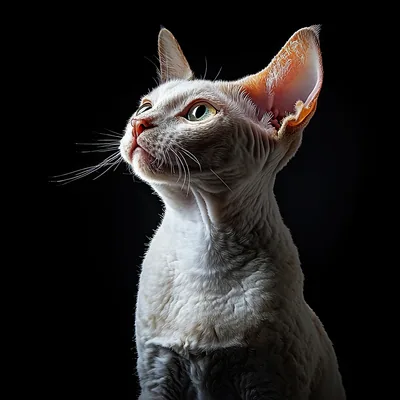
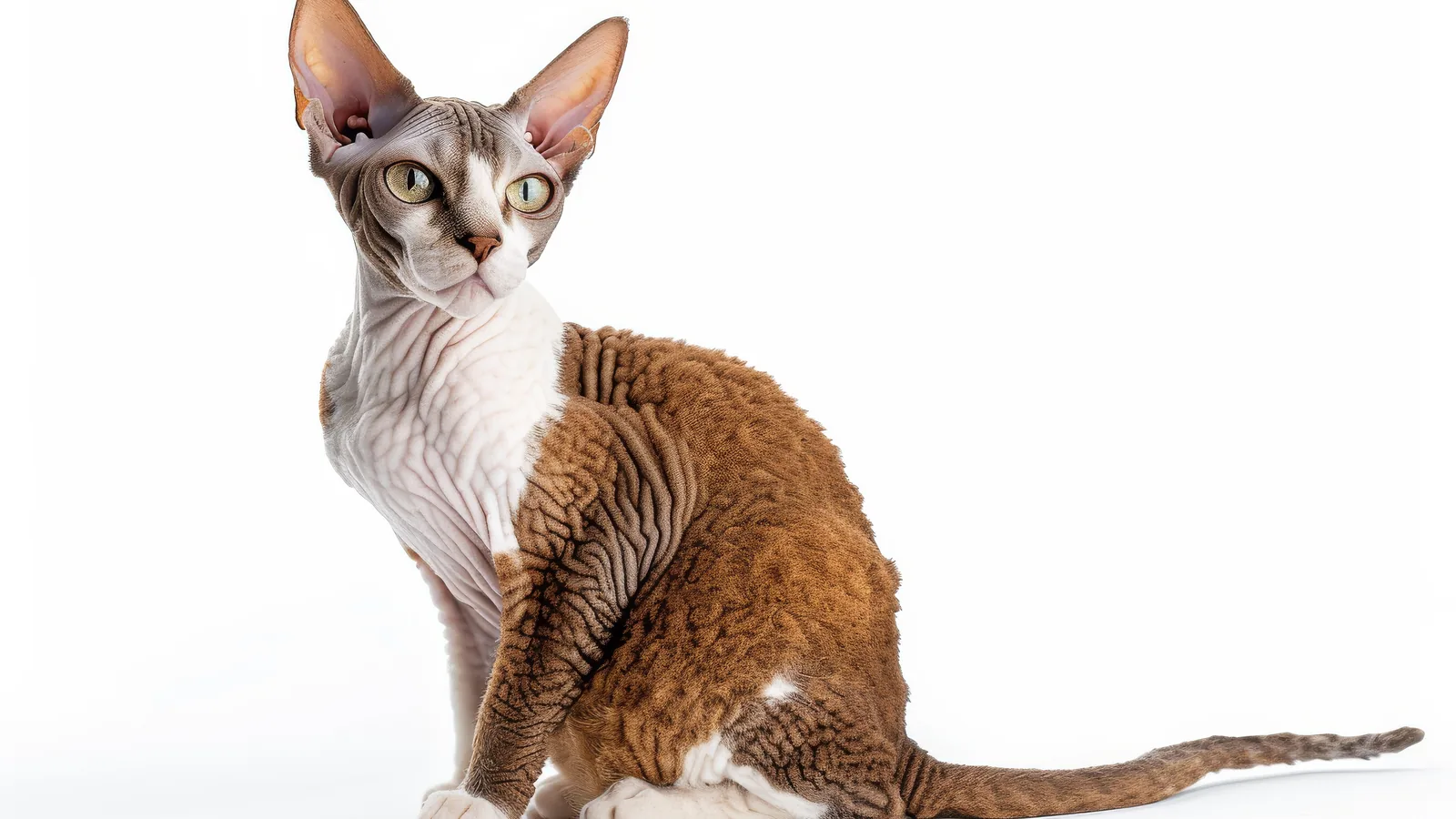
The Cornish Rex is the "greyhound of cats" — sleek, arched, and impossibly soft, with a coat of tight marcel waves that feels like crushed velvet. Born from a natural mutation in Cornwall, England, it has a slender athletic body, huge ears, and an egg-shaped head that give it a truly distinctive silhouette.
Cornish Rex cats are perpetual kittens: playful, mischievous, and affectionate for life. They run, leap, and fetch with abandon, then curl up warm against their favorite person. Clever, acrobatic, and people-loving, they're an endlessly entertaining companion for active, engaged homes.
Breed at a Glance
Coat Colors
The breed appears in a range of colors and patterns. Here are some of the most recognized.
Temperament & Personality
Cornish Rex cats are playful, affectionate, and mischievous, staying kitten-like throughout their lives. They're acrobatic, clever, and warmth-seeking, wanting to be involved in every activity. Their boundless energy and devotion make them constantly entertaining.
- Perpetually playful — they act like kittens well into old age.
- Acrobatic and athletic, leaping and racing around the house.
- Affectionate and warmth-seeking, curling against their people.
- Clever and trainable, learning fetch and tricks easily.
Exercise & Enrichment Needs
Highly active and agile, the Cornish Rex needs plenty of play and vertical space. They love to run, jump, and perform aerial feats.
- Climbing trees & shelves — they scale and leap constantly.
- Fetch & chase games — they retrieve enthusiastically.
- Interactive wand play — channels their acrobatic energy.
- Puzzle feeders — satisfy their busy minds.
Grooming & Care
The fine, wavy coat sheds very little, but the skin produces oils that need occasional attention instead of brushing.
- Handle the delicate coat gently — heavy brushing can damage it.
- Occasional baths remove oil buildup from the skin.
- Clean the large ears regularly, as they collect wax.
- Routine nail and dental care.
Health Considerations
Cornish Rex are generally healthy, with a few conditions worth keeping on the radar.
- Hypertrophic cardiomyopathy (HCM) — the common feline heart concern.
- Patellar luxation — a kneecap issue seen in the breed.
- Anesthesia sensitivity — inform your vet before procedures.
- Skin oiliness — occasional bathing keeps skin healthy.
Is a Cornish Rex Right for You?
The Cornish Rex is perfect for active homes wanting a playful, affectionate, acrobatic companion with an ultra-soft, low-shedding coat.
A Cornish Rex may be perfect if you…
- Want a lively, playful, kitten-like cat for life.
- Can offer daily play and warmth.
- Love a low-shedding, uniquely soft coat.
Think twice if you…
- Want a calm, sedentary cat.
- Live in a cold home without warm spots.
- Prefer an independent, aloof companion.
🐾What is the Cornish Rex like?
Playful, affectionate, and mischievous, an active 'greyhound of cats' that stays kitten-like.
🎾How much exercise do they need?
High — extremely playful and athletic; needs toys, climbing, and interaction.
✂️What about grooming & coat care?
Soft, wavy short coat sheds very little; needs minimal brushing but occasional bathing.
❤️Health & longevity
Typically 11–15 years; watch for HCM and sensitivity to cold.
👪Who are they good with?
Fun, social family cats great with kids and pets; crave warmth and company.
The Cornish Rex is always welcome here.
Whether your Cornish Rex is here for a spa day, a fun-filled daycare visit, or a cozy overnight stay, our team understands exactly what this breed needs to feel safe, happy, and completely at home. We tailor every stay to your pet's unique personality — just like we would for our own.