WhoWho developed the Ocicat?
Created accidentally while breeding Siamese and Abyssinians.
WhatWhat defines the breed?
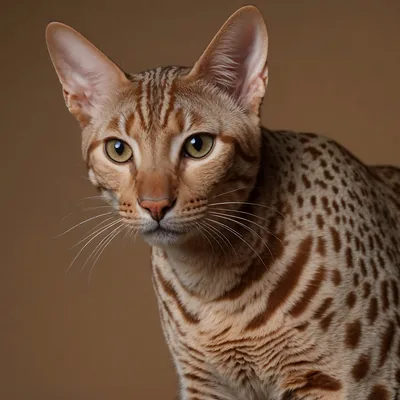
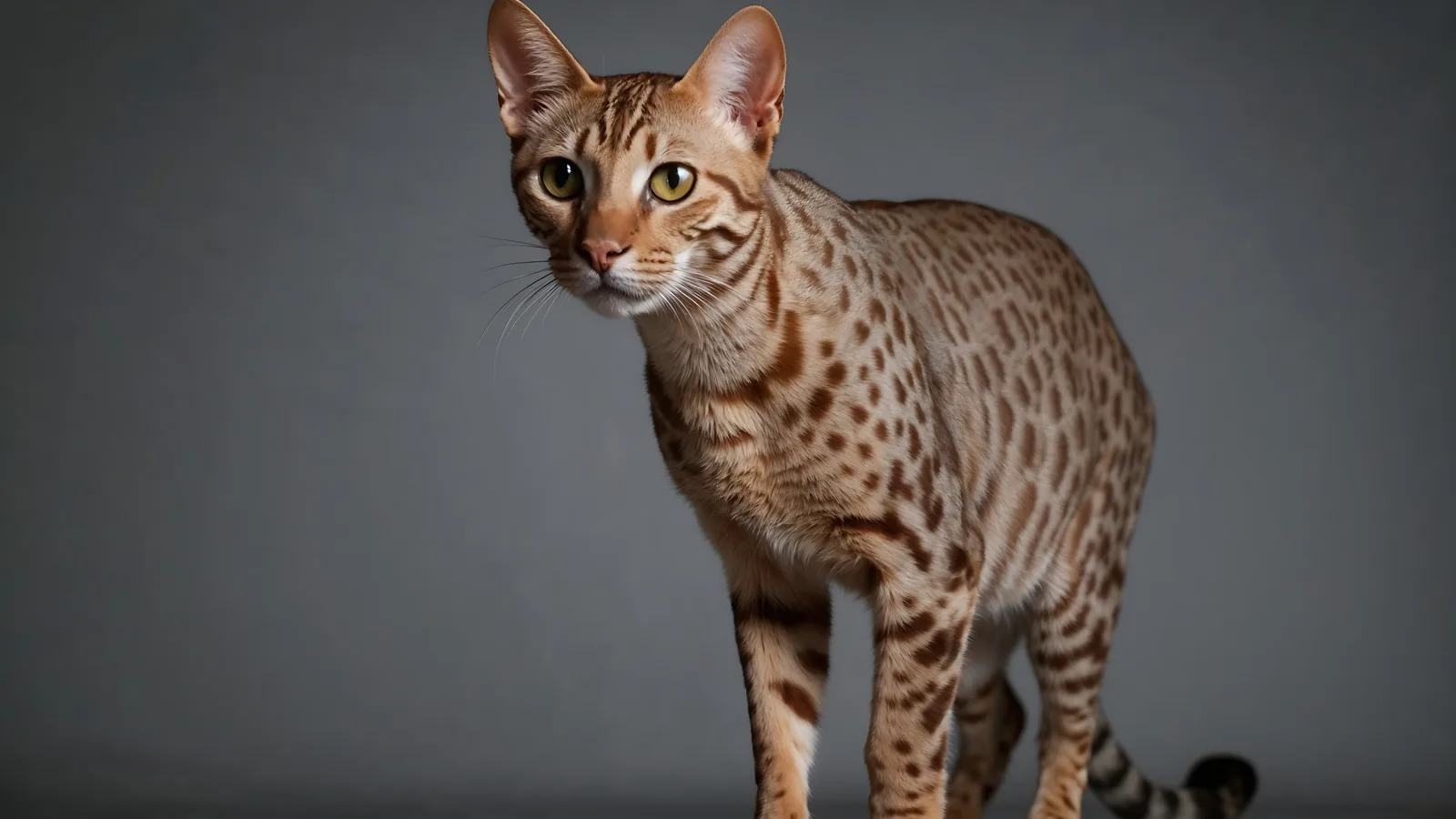
A spotted cat that looks wild but is entirely domestic and friendly.
WhereWhere did it originate?
Developed in the USA.
WhenWhen did the breed begin?
First appeared in 1964.
WhyWhy was the breed created?
An unexpected spotted kitten that was developed into a full breed.
About the Ocicat
The Ocicat looks like a wild spotted cat but is entirely domestic — a happy accident from crossing Siamese, Abyssinian, and American Shorthair lines. The result is an athletic, well-muscled cat draped in a striking spotted "agouti" coat that evokes an ocelot, paired with a thoroughly friendly, house-cat temperament.
Confident and outgoing, the Ocicat craves interaction. They greet guests, learn tricks, and often bond into whatever the household is doing. Their combination of exotic looks and sociable, low-maintenance nature has made them a favorite for owners who want wild style without a wild personality.
Breed at a Glance
Coat Colors
The breed appears in a range of colors and patterns. Here are some of the most recognized.
Temperament & Personality
Ocicats are social extroverts. They dislike being left alone, thrive on company, and are famously easy to train — many walk on a leash, fetch, and respond to their names. That mix of energy and biddability makes them endlessly engaging.
- Highly social — bond with the whole family and greet strangers happily.
- Trainable and clever — learn tricks, leash-walking, and games quickly.
- Confident and adaptable — rarely shy, they take change in stride.
- Dislike solitude — happiest with company, human or animal.
Exercise & Enrichment Needs
This is an athletic, energetic breed that needs real outlets. An under-stimulated Ocicat will invent its own entertainment, so plan for daily active play and enrichment.
- Fetch & trick training — they love a job and a reward.
- Leash walks — many take to a harness readily.
- Climbing towers — burn energy with vertical challenges.
- Puzzle feeders — satisfy their busy, problem-solving minds.
Grooming & Care
The Ocicat's short, tight coat is wonderfully low-maintenance and shows off those spots with almost no effort from you.
- A weekly rub with a grooming mitt keeps the coat glossy.
- Occasional baths bring out the shimmer before shows.
- Trim nails every couple of weeks and check ears.
- Brush teeth regularly to support long-term dental health.
Health Considerations
Ocicats are generally robust thanks to their varied ancestry, but a few inherited conditions from parent breeds are worth screening.
- Hypertrophic cardiomyopathy (HCM) — the most common feline heart condition; ask about screening.
- Pyruvate kinase deficiency (PK-Def) — a DNA test is available.
- Progressive retinal atrophy — inherited from Abyssinian lines.
- Periodontal disease — regular dental care helps prevent it.
Is a Ocicat Right for You?
The Ocicat suits active, interactive homes that want a striking, social cat — but not one that likes long hours alone.
A Ocicat may be perfect if you…
- Want an exotic look with a friendly, trainable personality.
- Can offer daily play, company, and enrichment.
- Would enjoy leash-walks and trick training.
Think twice if you…
- Are away from home for long stretches.
- Want a quiet, independent, low-energy cat.
- Prefer a lap cat over an athletic playmate.
🐾What is the Ocicat like?
Confident, social, and energetic, a wild-looking but fully domestic cat that's dog-like and devoted.
🎾How much exercise do they need?
High — active, athletic, and smart; needs play, climbing, and company.
✂️What about grooming & coat care?
Short, spotted coat is very low-maintenance; weekly brushing keeps it sleek.
❤️Health & longevity
Typically 12–18 years; watch for HCM, PRA, and dental issues.
👪Who are they good with?
Outgoing family cats, great with kids and pets; sociable and trainable.
The Ocicat is always welcome here.
Whether your Ocicat is here for a spa day, a fun-filled daycare visit, or a cozy overnight stay, our team understands exactly what this breed needs to feel safe, happy, and completely at home. We tailor every stay to your pet's unique personality — just like we would for our own.