WhoWho developed the Scottish Terrier?
Developed in the Scottish Highlands as an earth-working terrier.
WhatWhat defines the breed?
A distinctive, dignified little terrier with a strong will.
WhereWhere did it originate?
Developed in Scotland.
WhenWhen did the breed begin?
Refined in the 1700s–1800s.
WhyWhy was the breed created?
Bred to hunt vermin and den-dwelling animals.
About the Scottish Terrier
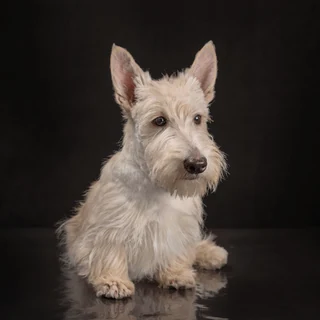
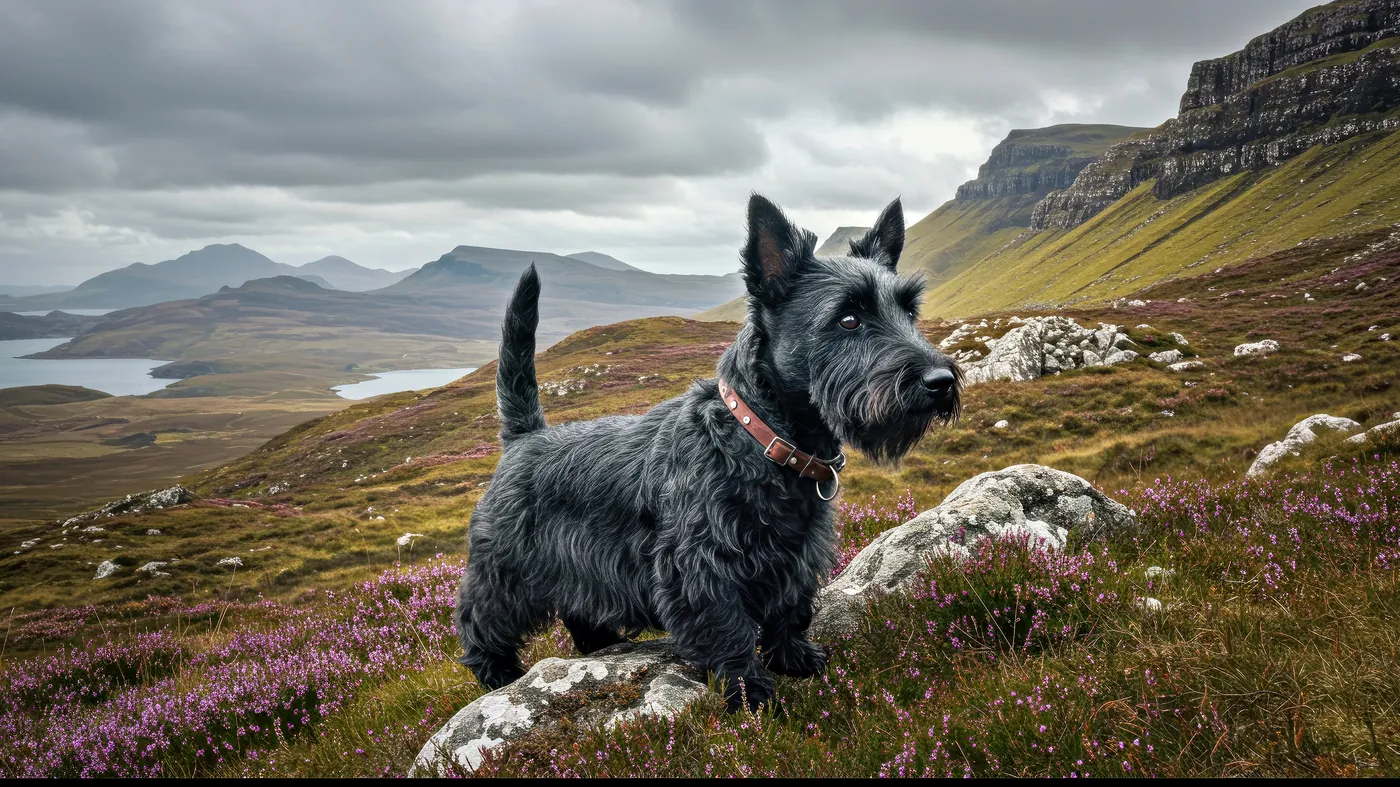
The Scottish Terrier — the 'Scottie' — is a compact, dignified dog with an unmistakable silhouette: wiry beard, sharp outline, and a proud, upright bearing. Bred in the Scottish Highlands to hunt vermin among the rocks and dens, the Scottie is bold, independent, and self-assured, with a serious streak that has earned it the nickname 'the Diehard.'
Scotties are loyal and affectionate with their own people but reserved, even aloof, with strangers. They don't lavish affection indiscriminately — their devotion is earned and deeply loyal. Confident and a touch stubborn, they carry themselves like a much larger dog and make characterful, low-fuss companions for owners who appreciate an independent spirit.
Breed at a Glance
Coat Colors
The breed appears in a range of colors and patterns. Here are some of the most recognized.
Temperament & Personality
The Scottie is spirited, dignified, and fiercely independent. They form strong bonds with their family but keep their own counsel, and they're famously stubborn — a trait that reads as charm to admirers and challenge to first-time owners. Beneath the reserve is a playful, bold little dog with a big sense of self.
- Loyal and affectionate with family, reserved with strangers.
- Bold and confident — plenty of terrier bravery in a small body.
- Independent and stubborn; responds to patience, not force.
- Alert and territorial, making a keen little watchdog.
Exercise & Enrichment Needs
Scotties need moderate but consistent exercise. They enjoy a good daily walk and some play, but they're not tireless like some terriers. Mental engagement matters as much as physical activity.
- Daily walks — steady leashed walks suit their measured energy.
- Digging outlets — a sandbox saves your flower beds from a born digger.
- Puzzle toys & scent games — satisfy that busy, clever mind.
- Short training sessions — keep them fun and reward-based to hold interest.
Grooming & Care
The Scottie's hard, wiry double coat is signature — and high-maintenance. Keeping that sharp outline takes regular work.
- Brush 2–3 times a week to prevent matting in the beard and furnishings.
- Hand-strip (show) or clip (pet) every few months to maintain coat texture.
- Keep the beard and leg furnishings clean and trimmed.
- Trim nails and check ears regularly.
Health Considerations
Scotties are generally sturdy but have a few breed-specific concerns worth knowing and screening for.
- Scottie cramp — a harmless movement disorder unique to the breed.
- Von Willebrand's disease — a bleeding disorder with a DNA test available.
- Bladder cancer — the breed has a higher-than-average risk; watch for urinary changes.
- Craniomandibular osteopathy — a jaw-bone condition seen in some young terriers.
Is a Scottish Terrier Right for You?
Scotties reward owners who respect their independence with quiet, dignified devotion — but they're not a dog you can bend to your will.
A Scottish Terrier may be perfect if you…
- Appreciate an independent, dignified, low-shedding companion.
- Can commit to regular professional grooming.
- Enjoy a characterful dog with a strong sense of self.
Think twice if you…
- Want an eager-to-please, endlessly biddable dog.
- Have small pets the terrier instinct may target.
- Prefer a cuddly, demonstrative breed with everyone.
🐾What is the Scottish Terrier like?
Independent, confident, and spirited, a dignified terrier with a bold, self-assured character.
🎾How much exercise do they need?
Moderate — daily walks and play satisfy this compact but energetic breed.
✂️What about grooming & coat care?
Wiry double coat needs regular brushing and hand-stripping or clipping every few months.
❤️Health & longevity
Typically 12 years; watch for von Willebrand's disease, bladder cancer, and skin issues.
👪Who are they good with?
Loyal companions best with older, respectful kids; can be aloof with strangers and other dogs.
The Scottish Terrier is always welcome here.
Whether your Scottish Terrier is here for a spa day, a fun-filled daycare visit, or a cozy overnight stay, our team understands exactly what this breed needs to feel safe, happy, and completely at home. We tailor every stay to your pet's unique personality — just like we would for our own.